An invoice shows that you paid for a service; a useful history shows which truck it belongs to, what was done and what still needs attention. When several drivers and shops maintain a fleet, that distinction matters. The goal is to reconstruct each main-engine oil change without depending on one person’s memory.
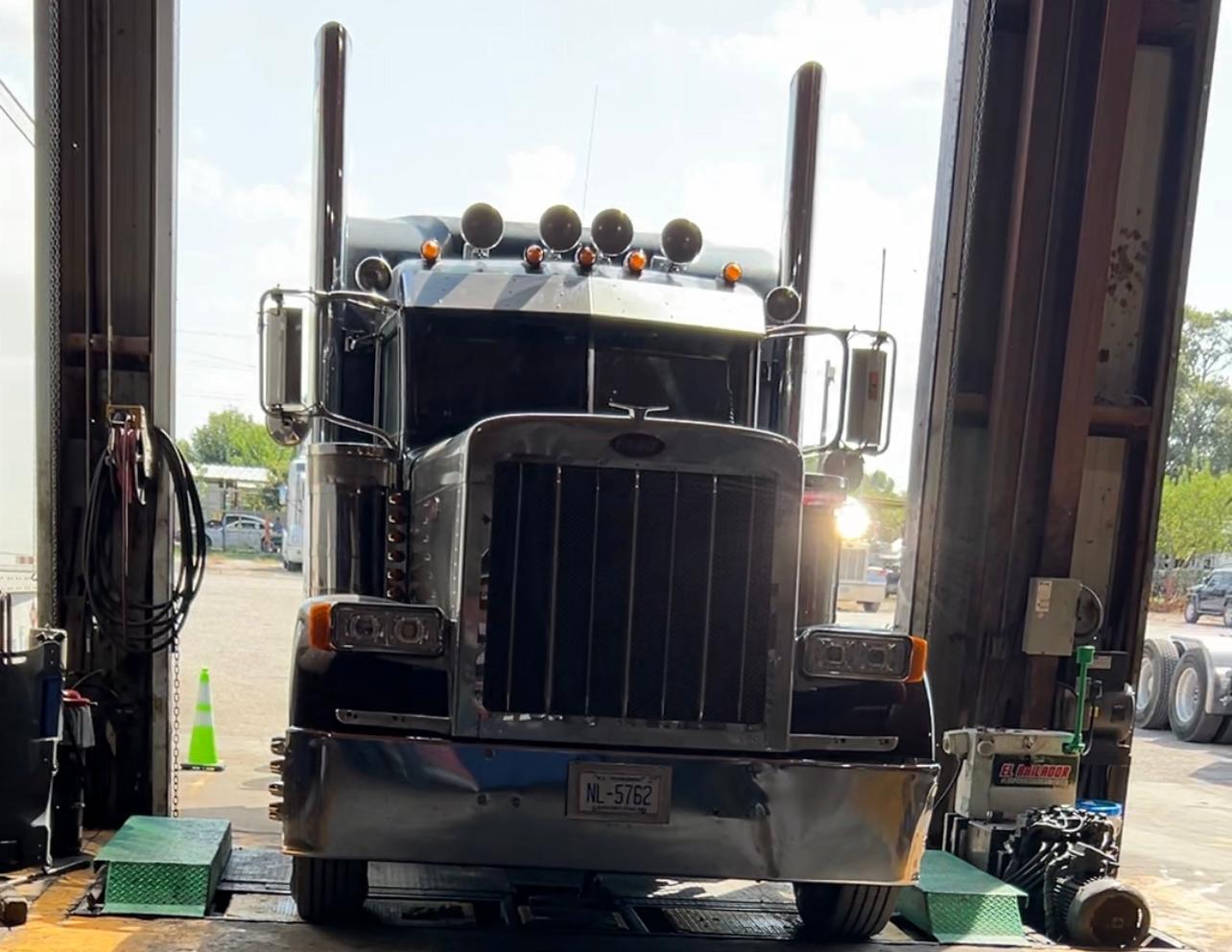
Context photograph: a truck at The Truck Savers™ facilities. It does not show an oil change or establish that a service was performed.
One record per truck, with clearly identified counters
Assign a stable fleet identifier and link it to the VIN and the engine model and serial number when available. Keep the manual and maintenance reference for that configuration. Document an engine replacement: the truck’s history does not automatically become the age of the engine installed.
Identify the odometer, main-engine hours and oil use since the previous change separately. Label distance as miles or kilometers; do not mix units. POLARIS Laboratories distinguishes total component time from lubricant time in service. An APU’s hours belong to a different piece of equipment and its own history. Reference: https://polarislabs.com/getting-ready-to-submit-your-samples-online/
Record completed work as well as requested work
FMCSA’s records guide distinguishes vehicle identification, planned maintenance and a record of the date and nature of completed work. It is a reference for organizing the file, not a claim that this worksheet covers every obligation for every operation. Check the requirements that apply to your carrier. Source: https://csa.fmcsa.dot.gov/safetyplanner/MyFiles/SubSections.aspx?ch=22&sec=65&sub=147
For each service, keep the date, available counter readings, shop and work-order number. Ask for documentation identifying the oil product, viscosity and recorded specification, the quantity used with its unit, and the installed filter reference. Request clarification for missing details; an oil brand or a generic “service” charge does not complete the record by itself.
Distinguish “requested,” “completed” and “pending.” A quote does not establish completion; an inspection does not establish part replacement. Attach the final work order and available documents to the same event. When a reading or description is corrected, retain the original entry, clarification, date and who confirmed it instead of silently erasing the original.
The next service needs a reference and an owner
Record the agreed next due point and the reference used to set it: the manual, applicable schedule or a documented recommendation for that truck. Identify whether date, distance or hours apply and how those criteria are used. The Freightliner 108SD Plus and 114SD Plus manual, for example, distinguishes operating schedules and uses hours in a specific case. Do not transfer its table to every truck. Example source: https://www.dtnatechlit.com/portal-public/0000121887-108sd-plus-and-114sd-plus-maintenance-manual/0000121887.xml/%24/0000120629
Assign responsibility for checking the appointment, missing data and each outstanding recommendation. Separate the planned date from the actual completion date. When closing a work order, check that it belongs to the right truck and update its history; administratively closing an invoice does not establish that every finding was addressed.
Before comparing the fleet, check for gaps in the file
Documentation-review example, not a customer case: you have an invoice and date, but no service odometer reading. First request the corresponding document or reading. Do not calculate that oil change’s mileage from another truck’s average. Until supporting evidence is available, keep the field marked “not recorded”; an estimate must not be presented as an actual reading.
Look for duplicate work orders, misidentified trucks and differences between miles, kilometers and hours. Keep original documents and link a correction to the relevant event. When comparing trucks, identify their engines and operation: a complete history helps frame questions, but does not by itself prove less wear, savings or permission to extend an interval.
Link laboratory reports to the right service event
Keep the report and sample identifiers with the truck, sampling date, product and oil time in service. Attach the background requested by the laboratory, including top-ups and recent changes where applicable. POLARIS Laboratories warns that incorrect fluid information can affect testing, recommendations and turnaround. Source: https://polarislabs.com/why-accurate-sample-information-is-important/
We always recommend used oil analysis by a specialist laboratory to help establish the interval, interpreted with history, operation and manufacturer guidance. One favorable sample does not authorize an extension. Cummins OilGuard for X-Series engines combines engine data and samples under manufacturer assessment; it illustrates a specific monitoring process, not an in-house laboratory service at The Truck Savers™ or approval for every engine. Program reference: https://mart.cummins.com/imagelibrary/data/assetfiles/0032786.pdf
A record you can copy into your maintenance log
Truck/VIN and engine; planned and actual date; odometer and distance unit; engine hours; work order/shop; completed work; oil/specification/quantity; filter; attached documents; laboratory report if available; pending items and owner; next due point and reference used. This editorial checklist helps organize information; it is not an official form or a promise of compliance or warranty coverage.
For truck oil changes in Houston, explore The Truck Savers™ service and share your available records. Confirm the scope and request documentation of completed work. The Truck Savers™ oil-change service is offered only in Houston; oil analysis is performed by a specialist laboratory.
Need help with your truck?
Our team of experts is ready to help you. Schedule a free "La Bailada™" inspection and discover the real condition of your truck.