
If your truck pulls to the right or left, asking for “an alignment” may jump ahead of the findings. Before choosing the work, describe exactly what happened and let a technician inspect the truck. This guide helps prepare that discussion; it does not determine whether the truck is safe to drive.
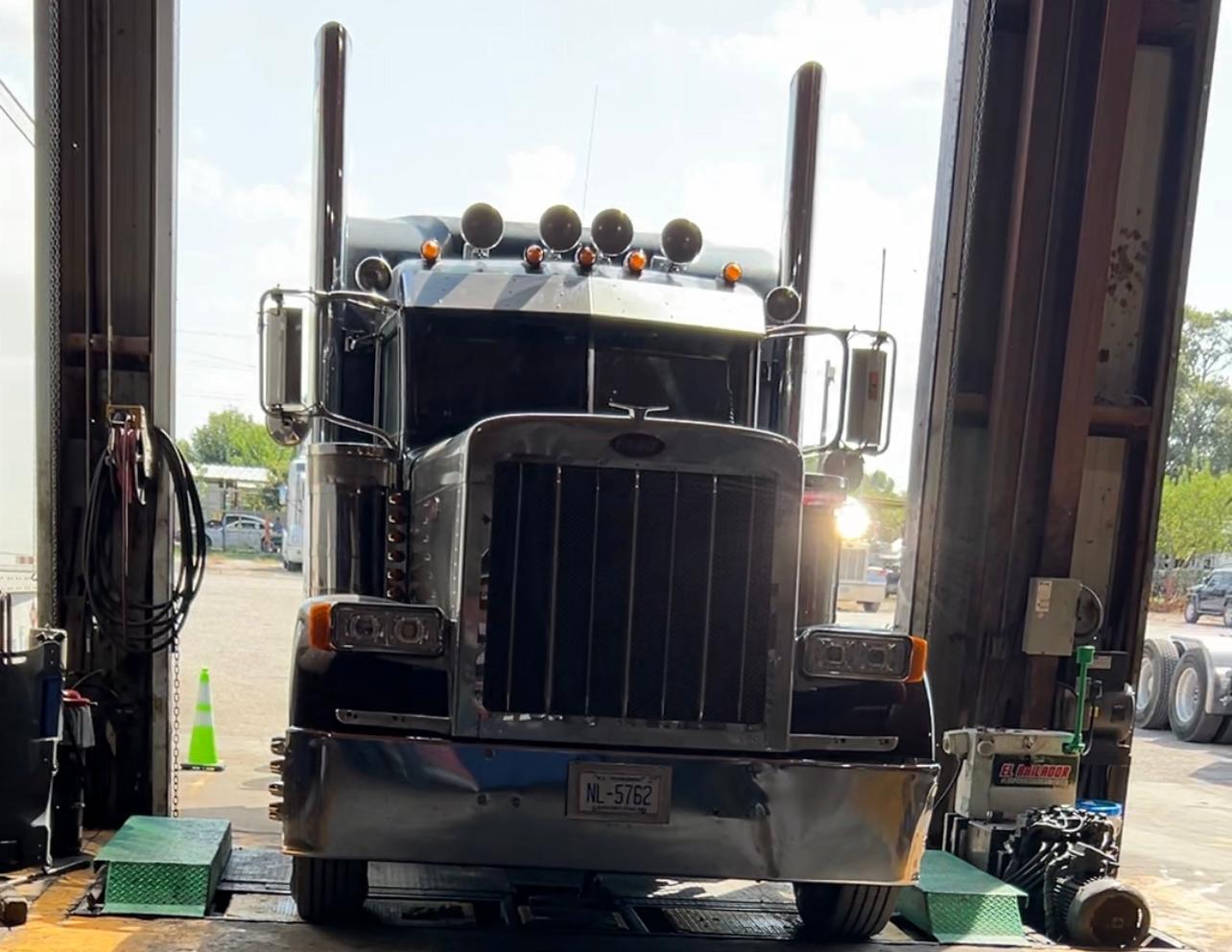
Context photograph: a truck at The Truck Savers™ facilities. It does not document directional pull, a steering failure or an alignment result.
Separate the symptom from its cause
A steady tendency toward one side is different from a shaking steering wheel or an off-center wheel. Explain which you noticed and whether more than one occurred. TRW’s commercial steering diagnostic manual distinguishes directional pull from other handling complaints and starts by understanding the driver’s description. It is a professional reference, not a do-it-yourself procedure. Source: https://www.trwaftermarket.com/globalassets/na/trucksteering---literature/other-manuals/other-manuals-sm/trw1250.pdf
Record whether it occurred while traveling or under braking, when it started, and whether it followed a tire change or other work. In its directional-pull section, TRW asks about braking or acceleration and includes brake-balance checks. That context guides the investigation; it does not establish that a brake, tire or alignment is the cause.
Describe only what you already observed during operation. Do not release the steering wheel, make test stops or seek a speed that reproduces the problem. If you cannot control the steering safely, stop safely and obtain assistance before continuing. Do not delay attention to complete a record.
Tires: bring measurements, not a universal pressure
Ask for documented cold pressures, the size and position of each relevant tire, and the specification used. Michelin explains that appropriate pressure depends on the tire, load and application; one PSI does not fit every truck. A tire that “looks fine” is not a substitute for a measurement. Source: https://business.michelinman.com/tips-suggestions/truck/commercial-truck-tire-pressure
If you have earlier readings, keep when and under what conditions they were taken. Do not label a hot reading as cold or reduce pressure to match numbers without the applicable procedure. If no reliable measurement is available, write “to be verified” and leave the evaluation to trained personnel.
Wear photos can help when they identify axle, side and date, but they are not a diagnosis. Michelin connects different patterns with alignment, pressure, suspension and operating conditions. Ask the shop to compare the observation with measurements and component inspection rather than select a part solely from a tire’s appearance. Source: https://business.michelinman.com/tips-suggestions/truck/irregular-tire-wear-101
What inspection should clarify before adjustment
Ask which steering and suspension components were inspected and which findings were recorded. The Freightliner 108SD Plus and 114SD Plus maintenance manual warns that steering is critical to safety. Its procedures and limits apply to those models: do not transfer a tolerance to another truck or inspect beneath an unsecured vehicle. Model-specific source: https://www.dtnatechlit.com/portal-public/0000121887-108sd-plus-and-114sd-plus-maintenance-manual/0000121887.xml/%24/0000120760
At The Truck Savers™, El Bailador™ supports suspension and steering inspection through controlled movement. It helps the technician observe the assembly; it does not repair components or establish the cause of directional pull by itself. Findings must be considered alongside the inspection and the truck’s applicable specifications.
Also ask which axles will be measured and what report you will receive. Hunter describes alignment equipment for multi-axle trucks. That supports considering the vehicle’s overall geometry; it does not establish which equipment a shop owns or guarantee that alignment will eliminate every pull. Ask for measurements and their references, not just “it is aligned now.” Source: https://www.hunter.com/en-int/heavy-duty/
A short record to give the technician
Collect these fields: truck and model; date and odometer; direction of pull; whether it happened under braking or while traveling; any vibration or off-center steering wheel; load and trailer present; symptom onset; recent work; available readings and photos. Mark unknown details as unknown. Bring previous invoices and reports.
When reviewing proposed work, ask: what was established, what still needs verification, and which measurement supports the work? Afterward, keep the initial and final reports and any outstanding recommendations. Adjusting angles does not replace addressing another finding, and a temporary absence of the symptom does not certify the condition of the whole vehicle.
To explore truck alignment in Houston with The Truck Savers™, share the symptom and your truck’s history. Ask for an assessment that distinguishes observations, measurements and conclusions before authorizing work.
Need help with your truck?
Our team of experts is ready to help you. Schedule a free "La Bailada™" inspection and discover the real condition of your truck.