
A used oil report can reveal signals that are invisible on the dipstick. But a green box does not certify a fault-free engine, and a flagged number does not identify a part to replace. The useful questions are what changed, which history it is compared with, and what information accompanied the sample.
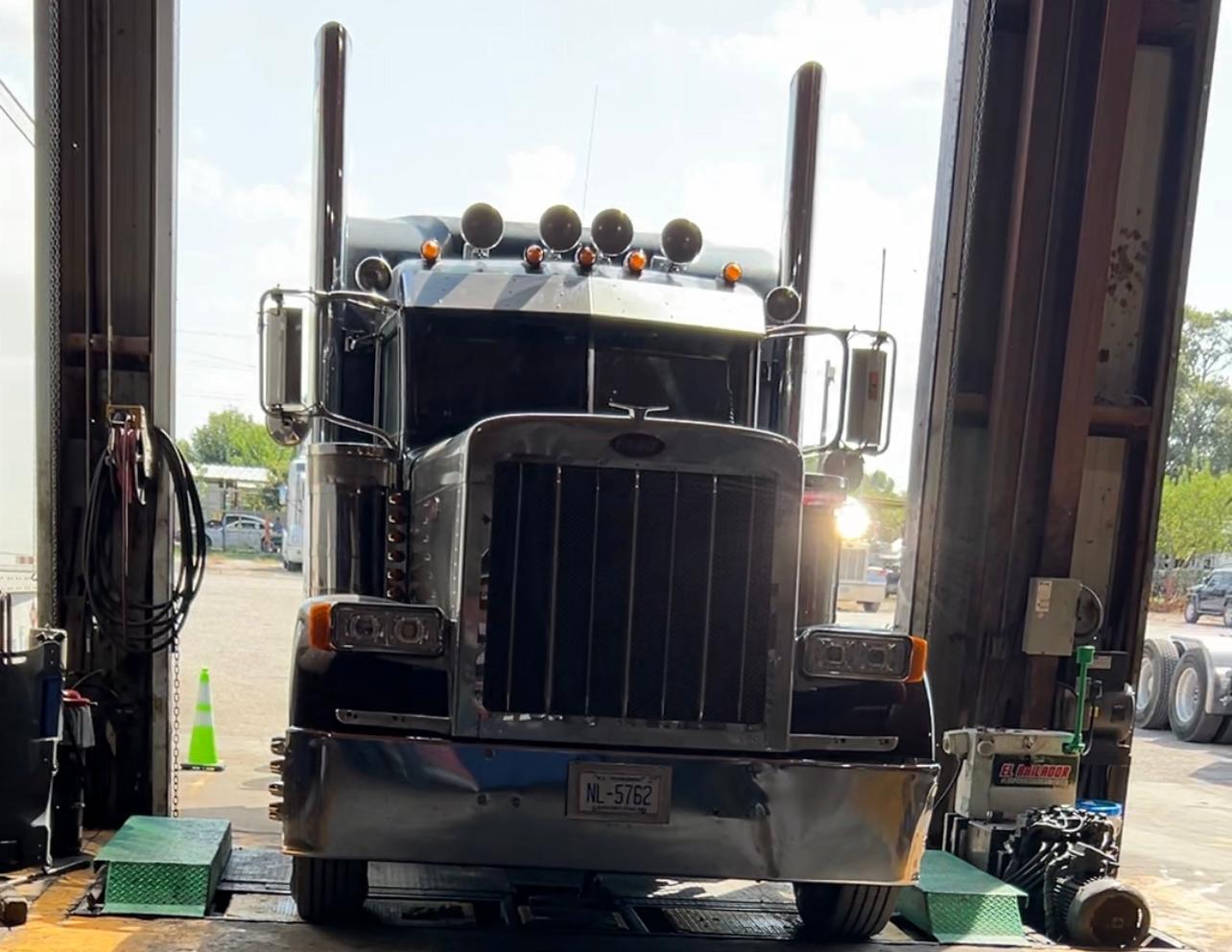
Context photograph: a truck at The Truck Savers™ facilities. It does not depict oil sampling or laboratory testing.
Separate three groups of results
Lubricant condition: tests such as viscosity help assess the oil against its reference. Interpretation needs the product specification and the laboratory’s criteria. One universal number cannot cover every engine.
Contamination: depending on the test package, the laboratory can investigate fuel, water, coolant or other contaminants. Ask what was actually measured and by which method. An element appearing in the report does not establish the source of contamination.
Metals and elements: concentrations can provide clues about wear, additives or contamination. Do not turn one iron, copper or silicon reading into a repair order. The laboratory needs to relate it to other results, the oil’s formulation and that unit’s history.
Caterpillar explains these test groups, while Blackstone shows that an element may have several sources. These references help explain a report; they are not limit tables for every semi truck. Sources: https://www.cat.com/en_US/support/maintenance/sos-services/take-sample.html and https://www.blackstone-labs.com/how-to-read-your-oil-report/
The sample label is part of the analysis
Before comparing results, check that they belong to the same engine and compartment. Record the unit identifier, oil product and viscosity, sample date, unit mileage or hours, and mileage or hours on the oil. Note recent lubricant or filter changes, repairs and oil added between services.
Ask the laboratory for sampling instructions and have the technician follow the unit’s safe procedure. A contaminated container or inconsistent identification can make comparisons misleading. Useful information does not require improvised sampling beside hot or moving parts. Sampling and labeling reference: https://www.chevronlubricants.com/content/chevron-lubricants/en_us/home/learning/from-chevron/industrial-machinery/used-oil-analysis-proper-sampling-produces-more-reliable-results.html
A trend needs comparable samples
The most useful comparison follows the same unit over time. If oil service hours, operating conditions or sampling practices change, document that difference before attributing the result to wear. Another driver’s truck does not replace your own baseline.
Perkins emphasizes historical results and accurate hours; Mobil advises reading the results together instead of making a decision from one alert. A trend guides an investigation, while diagnosis still requires evaluating the actual unit. References: https://www.perkins.com/en_GB/aftermarket/maintenance/perkins-fluid-sampling/oil-sampling.html and https://www.mobil.com/en/lubricants/for-businesses/industrial/lubricant-expertise/resources/mobil-serv-1-million-samples-analyzed
What a report cannot authorize on its own
Analysis does not replace mechanical inspection or guarantee detection of every fault. It cannot, by itself, determine the engine’s remaining mileage. If the laboratory requests follow-up, keep its recommendation and arrange the review with the technician. A hypothesis is not a confirmed repair.
We always recommend used oil analysis by a specialized laboratory to help establish an appropriate interval alongside service history, operating conditions and the manufacturer’s instructions. One favorable sample does not authorize a longer interval, and topping up is not a complete oil change.
Four questions to finish the review
Bring the complete report and ask: Was the identity and oil service time verified? What changed from earlier samples? Which test or inspection is needed to confirm the cause? What is the next step, and when is it due? Keep the answer and follow-up findings with the truck’s service history.
The analysis belongs with a specialized laboratory. For your truck’s oil change in Houston, explore The Truck Savers™ service and share the unit’s records. Making an informed decision is more useful than chasing a green box without understanding what it means.
Need help with your truck?
Our team of experts is ready to help you. Schedule a free "La Bailada™" inspection and discover the real condition of your truck.