
“I am adding more oil” describes a concern, but it does not yet explain what is happening. Before blaming engine wear, collect comparable readings and find out how much oil was actually added. A clear record helps the technician investigate without turning a suspicion into a repair.
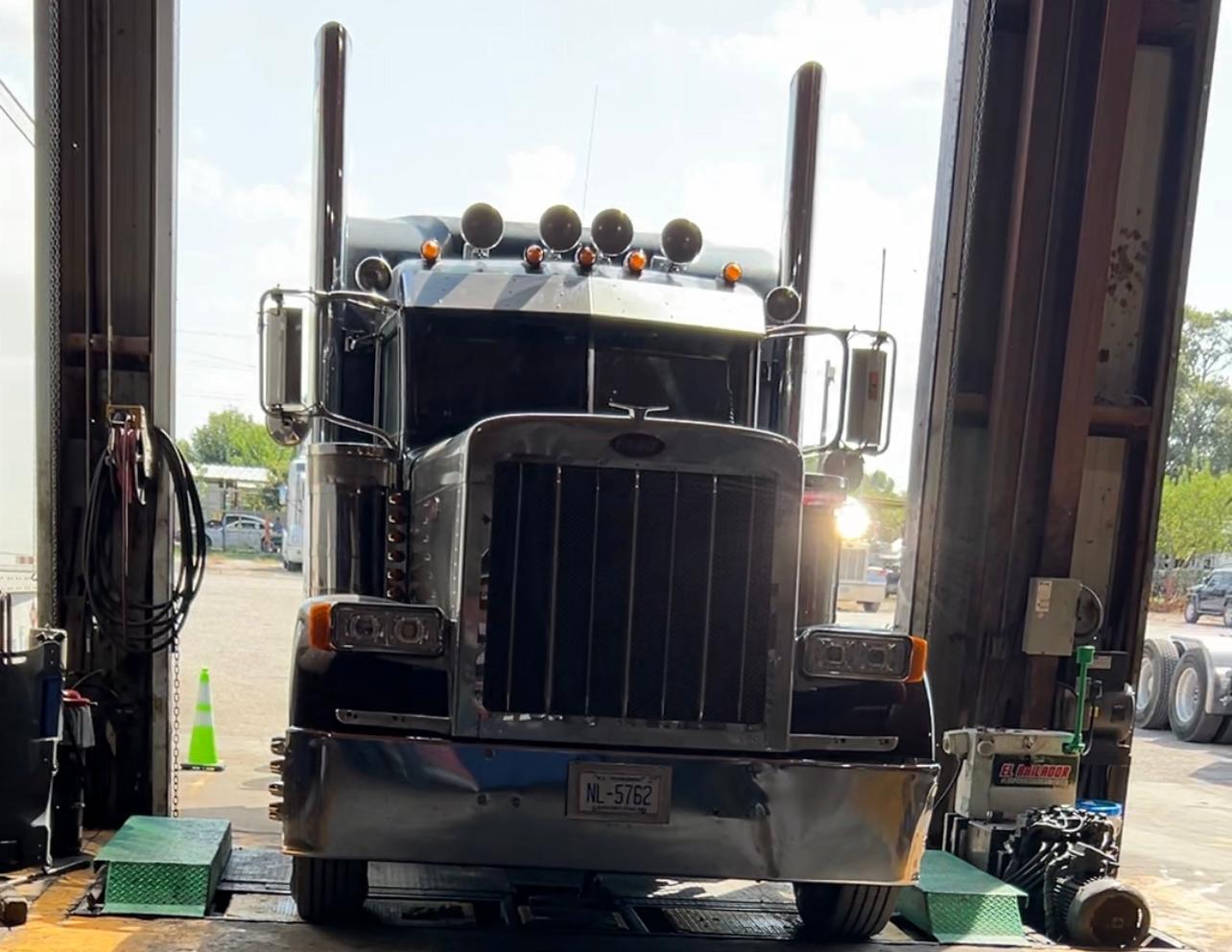
Context photograph: a truck at The Truck Savers™ facilities. It does not show an oil leak, an oil top-up or an oil-consumption test.
First, make the readings comparable
Truck position and measurement conditions matter. The 57X manual calls for a level surface and refers to the engine manufacturer for the waiting time after shutdown. Note how the measurement was taken. Do not compare an immediate reading on a slope with one taken after the oil has settled on level ground. Reference: https://www.dtnatechlit.com/portal-public/0000113195-57x-drivers-manual/0000113195.xml/%24/0000110447
Do not copy another engine’s waiting time or top-up quantity. For example, Detroit distinguishes temperature conditions in its Gen 5 DD15 procedure. Use the manual for your unit, its approved lubricant and its level markings. Overfilling is not a solution either. Model-specific reference: https://www.dtnatechlit.com/portal-public/0000009834-dd-platform-gen-5-operator-manual/0000009834.xml/%24/v4815123
What to record with each top-up
Identify the truck and engine. Record the date, odometer, engine hours if available, observed level and amount added, including the unit: liters or quarts. Keep the oil’s product name, viscosity and specification from the container. Mark an unknown value as unknown instead of filling it in from memory.
Keep the last oil-and-filter service invoice and record top-ups separately. If several drivers use the truck, have everyone record what they add. Buying a gallon does not prove that the whole gallon went into the engine. Record the amount used, not just the purchase.
Add context: routes, usual loads, idling periods and recent work. Describe stains, smoke or warnings as you observed them and note when they appeared. A photo taken from a safe position can accompany the note. Do not crawl beneath an unsecured vehicle or look for a leak beside moving parts.
Oil added does not establish the cause
To compare periods, the technician needs their start and end points, elapsed mileage or hours, and measurement conditions. Adding up top-ups without that context can mislead. The amount added records replenishment. By itself, it cannot separate a leak from other causes or establish how much oil was burned.
Ask for any oil-consumption conclusion to be checked against that engine’s documentation and an inspection of the truck. Do not adopt a universal “normal” figure or authorize rings, a turbo or another part solely because the oil level dropped. Ask which observation, test or measurement supports the proposal.
Keeping records must not delay necessary attention
For a sudden loss or absence of oil pressure, the 57X manual directs the driver to stop safely and have the cause investigated before operating the engine again. Follow your unit’s manufacturer warnings and procedure. Do not keep driving just to complete an oil-consumption log. Reference: https://www.dtnatechlit.com/portal-public/0000113195-57x-drivers-manual/0000113195.xml/%24/0000108688
Topping up does not replace an oil-and-filter change or restart its schedule. Keep the service date and agree on follow-up with the technician. If the amount needed changes, report the change with your records. Do not try to compensate by choosing thicker oil without manufacturer approval.
A simple record to bring to the shop
Copy these fields into a notebook: truck/engine; date; odometer/hours; reading conditions; level before; product and amount added; level afterward; observations; last service. Bring invoices and previous reports too. This organizes the discussion; it is not a certified test or a diagnostic procedure.
We always recommend used oil analysis by a specialized laboratory to help establish the service interval alongside history, operating conditions and manufacturer guidance. Perkins emphasizes identification and accurate hours; Blackstone explains the value of trends. Tell the laboratory about top-ups. One favorable sample does not authorize extending the interval. References: https://www.perkins.com/en_GB/aftermarket/maintenance/perkins-fluid-sampling/oil-sampling.html and https://www.blackstone-labs.com/how-to-read-your-oil-report/
For your truck’s oil change in Houston, explore The Truck Savers™ service and share the unit’s history. Laboratory analysis belongs with a specialized laboratory. Ask for written findings, what still needs to be verified and the next step.
Need help with your truck?
Our team of experts is ready to help you. Schedule a free "La Bailada™" inspection and discover the real condition of your truck.